If you are thinking about rewiring your home, the first question is almost always the same: how much is this going to cost? It is a fair question, and it is also one of the hardest to answer without seeing the property. The good news is that a rewire is far more predictable than most people fear, and once you understand what drives the price, it is much easier to plan for.
We are an electrical company based in Hamble, and we work with homeowners and landlords across Southampton and the rest of Hampshire. In this guide we explain the typical house rewire cost Southampton homeowners can expect, what is included, what pushes the price up or down, and how to compare quotes sensibly. The figures here are a rough guide only. Every house is different, and a proper quote always starts with someone looking at your wiring.
What Is the Typical House Rewire Cost Southampton Homeowners Pay?
For an average three bedroom house, most homeowners in the UK can expect a full rewire to land somewhere between about £4,000 and £6,500, with Southampton and the south coast usually sitting in the middle to upper part of that range. Smaller properties cost less, and larger or more complicated homes cost more. A flat might be done for a few thousand pounds, while a big detached house with several floors can run well beyond £8,000.
That price normally covers the electrician’s labour, the new cables, sockets, switches and light fittings, a new consumer unit (the fuse box), testing, and the certificate at the end. It does not always cover making good the walls and floors afterwards, which is one of the things we come back to below.
If your quote is dramatically lower than the others you receive, it is worth asking what has been left out. If it is dramatically higher, ask for a breakdown. A good electrician will be happy to explain every line.
What Does a Full Rewire Include?
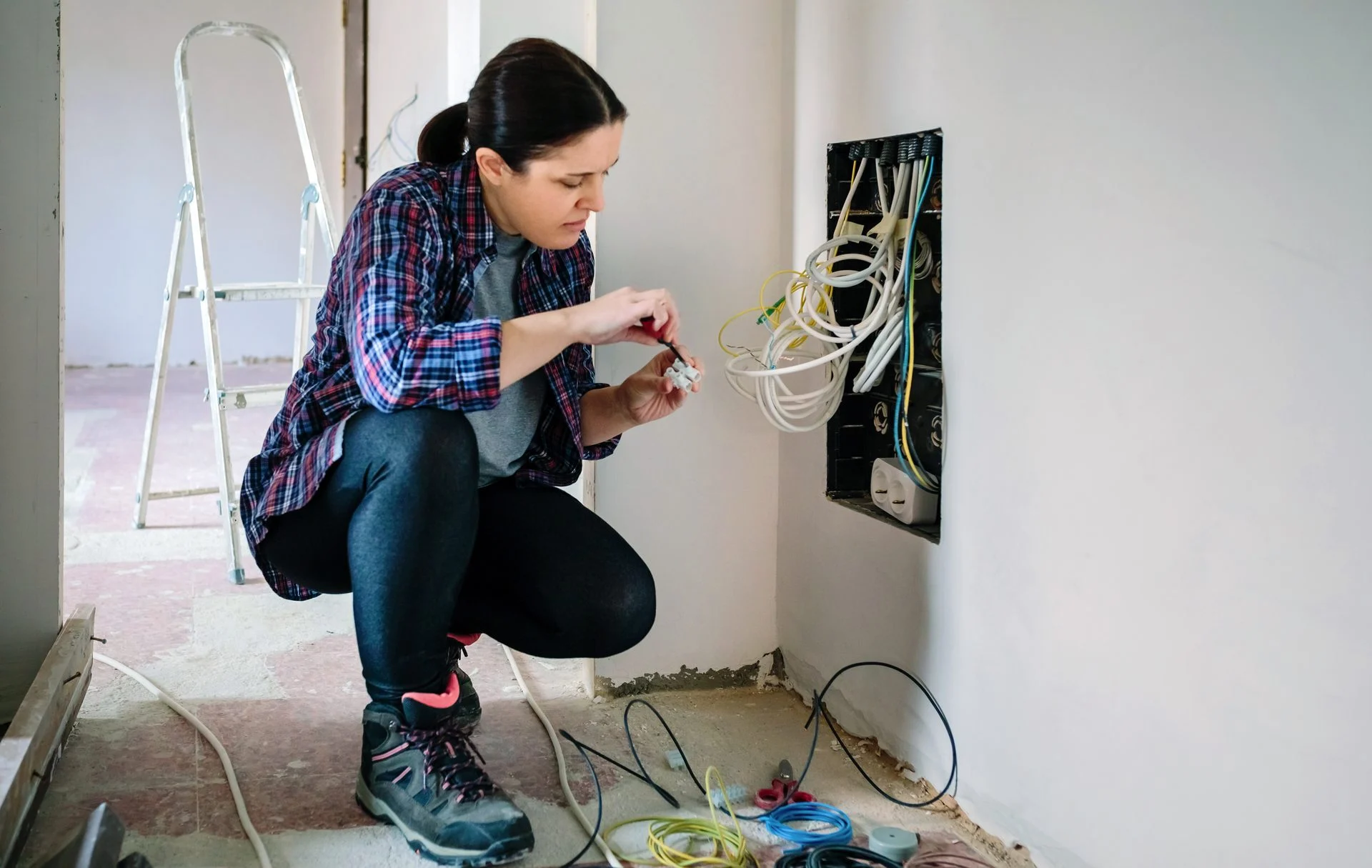
A rewire means replacing the fixed wiring that runs through your home, not just changing a few sockets. A typical job covers:
- Removing the old cables, or in some cases leaving them safely disconnected and out of use.
- Running new cables to every socket, light, switch and fixed appliance such as a cooker or shower.
- Fitting a new consumer unit with modern protection, including RCD protection and surge protection where needed.
- Installing new sockets, switches and ceiling roses, or reconnecting the ones you have chosen to keep.
- Earth bonding for gas and water pipes.
- Testing every circuit and issuing the paperwork to prove the work meets the current wiring regulations.
The aim is a safe, modern installation that will serve you for decades, and one that is ready for things like smart controls, an electric vehicle charger or a heat pump later on.
What Affects the Price of a Rewire?
Two houses with the same number of bedrooms can have very different quotes. These are the things that make the biggest difference.
The size of the property
More rooms mean more cable, more points and more hours. The number of floors matters too, because running cables up and down through a three storey townhouse takes longer than doing the same job in a bungalow.
The age and construction of the house
Many homes in Southampton are Victorian and Edwardian terraces, 1930s semis, or post war houses, and each brings its own challenges. Older homes can have solid floors, lath and plaster walls or limited loft access, all of which slow the work down. A modern timber frame property is usually quicker.
How many sockets and lights you want
This is the part you control. Many older houses simply do not have enough sockets for modern life, and a rewire is the ideal moment to add them. Extra points, outdoor lighting, spotlights and dimmers all add to the total, but they also add real day to day value.
Whether the house is empty or lived in
Rewiring an empty property is faster and cheaper because the electricians can lift floors and work freely. In a lived in home we need to work around your furniture and routine, which can add time.
Your choice of fittings
Standard white plastic sockets cost far less than brushed steel or brass finishes. Smart switches and designer light fittings sit at the higher end.
A Rough Price Guide by Property Size
As a quick at a glance guide, these are typical ranges for a full rewire in England at current prices. Please treat them as a starting point rather than a quote:
- One bedroom flat: roughly £2,000 to £3,500.
- Two bedroom house or flat: roughly £3,000 to £5,000.
- Three bedroom house: roughly £4,000 to £6,500.
- Four bedroom house: roughly £5,500 to £8,500.
- Five bedrooms or more: from about £7,500, depending heavily on size and layout.
Prices can move up if the house has difficult access, a lot of added circuits, or older materials that need special handling. They can move down if the property is empty, simple in layout and has easy loft and floor access.
Extra Costs to Plan For
The biggest surprise for most people is not the electrical work itself. It is everything around it. Before you agree a budget, think about these.
Making good. To run new cables, we often need to chase channels into plaster or lift floorboards. Afterwards, walls need replastering and decorating, and flooring may need refitting. Some electricians include basic making good in their price and others do not, so check which applies to your quote. If you are planning to redecorate anyway, the best time to rewire is just before you do.
Consumer unit upgrades. A new consumer unit is normally part of the job, but if you need a larger supply or extra protection, there can be an additional cost.
Hidden problems. Once the old wiring comes out, we sometimes find damaged cables, poorly installed earthing or old lead sheathed wiring. These are not common, but it is sensible to keep a small contingency, perhaps ten percent, in your budget.
Alternative accommodation. A full rewire in an occupied house is manageable, but some families prefer to stay elsewhere for a few days, especially if the power needs to be off for long stretches.
How Long Does a Rewire Take?
A typical three bedroom house takes around five to ten working days, depending on the layout and how much making good is involved. Flats are often quicker, and large or older homes take longer. We usually work in stages so that you are never without power for longer than necessary. Most of the time you can stay in the property, although there will be dust, noise and some disruption while floors and walls are opened up.
Signs Your House May Need Rewiring
Not every older house needs a rewire. Wiring can last a long time when it has been installed well and looked after. However, there are some warning signs worth taking seriously:
- Fuses that blow or breakers that trip regularly for no clear reason.
- Sockets or switches that feel warm, look scorched or crackle.
- A smell of burning around the consumer unit or a socket.
- Lights that flicker or dim when appliances turn on.
- An old fuse box with ceramic fuses and rewirable fuse wire.
- Cables covered in black rubber or fabric, which is a sign of very old wiring.
- Round pin sockets, or sockets with no earth connection.
If any of this sounds familiar, please do not wait. Faulty wiring is a genuine fire and shock risk, and it is far cheaper to deal with early than after something goes wrong.
Do You Need a Rewire or Just an Inspection?
Often the best first step is not a rewire at all. An Electrical Installation Condition Report, known as an EICR, is a thorough inspection and test of your existing wiring. It tells you whether the installation is satisfactory, whether anything needs urgent attention, and whether a full rewire is actually necessary. You can read more about it in our guide to getting an EICR service in Hampshire, or see our domestic EICR page.
An EICR is a sensible move if you are buying an older home, if you are a landlord, or if you simply do not know the state of your wiring. Sometimes a few targeted repairs and a new consumer unit are enough, which costs a fraction of a full rewire. Other times the report confirms that a rewire is the right answer, and you can plan with confidence.
How to Compare Rewire Quotes Fairly
When quotes come back with very different numbers, it is usually because they are not covering the same work. To compare them like for like, ask each electrician:
- Is the quote fixed, or an estimate that could change?
- How many sockets, lights and switches are included?
- Is a new consumer unit included, and what type?
- Is making good and redecoration included, or is it separate?
- What certificates will I receive when the job is finished?
- Is VAT included in the price?
- How long will the job take, and what happens if you find a problem?
Always ask for the quote in writing. A reputable electrician will visit your home, look at the existing installation and talk through what you actually want from the finished job before giving you a number.
Regulations, Certificates and Peace of Mind
A rewire is notifiable work in England, which means it has to meet Part P of the Building Regulations and follow the current wiring regulations, BS 7671. Either the work is carried out by a registered competent person who can self certify it, or it must be notified to your local building control department. When the job is finished you should receive an Electrical Installation Certificate, which is your proof that the work was tested and is safe. Keep it somewhere safe, because you will need it if you sell the house, and landlords and letting agents will want to see it too.
Please be wary of anyone who offers a much cheaper price in exchange for skipping the paperwork. A certificate is not a formality. It is the evidence that your installation is safe, and your insurer may ask for it.
Common Questions About Rewiring
Is a rewire worth the money?
If your wiring is genuinely outdated or unsafe, absolutely. A rewire protects your family, makes your home easier to sell, and gives you the right number of sockets and lights in the right places. It also prepares the house for modern demands such as electric vehicle charging, which you can read about in our guide to installing a home EV charger.
Do I have to redecorate after a rewire?
Usually some decoration is needed, because cables are often buried in the walls. How much depends on the house. Careful planning and good protection of your floors and furniture keep the mess to a minimum.
Can a rewire be done in stages?
Yes. Some homeowners rewire room by room or floor by floor, especially if they are renovating gradually. It can take longer overall, but it spreads the cost and the disruption.
How often should wiring be checked?
For a home you live in, an inspection every ten years is a sensible guide, or whenever you move into a new property. Rented homes need an inspection at least every five years.
Ready to Talk About Your Rewire?
The most reliable way to find out your house rewire cost in Southampton is to have someone take a proper look. At Premlex Electrical we are happy to visit, look at your wiring, talk through what you want, and give you a clear written quote with no pressure. If you are not sure whether you need a full rewire, we can start with an inspection and take it from there.
Take a look at our domestic installations and rewires page for more about what we do, visit our home page, or simply get in touch and tell us about your home. We would be glad to help.